
“Wow, you look amazing. What’s your secret?”
A friend I hadn’t seen in a few years said this to me in 2017 at a wedding. At the time, I was so excited to be seen and to have my changed body be noticed as something positive. Six years later, I still think of this interaction often.
In spring 2016, I started a medication for my chronic migraines that can also be prescribed as a weight loss drug. Weight loss was not my intention at the time and I didn’t even know if that would be a side effect I would have. Around the same time I started the medication, I also started working out regularly. I found a routine I liked, I got into strength training and really found my stride. A year later, I had lost about twenty pounds. I was so proud of all the “hard work” I’d put in and that I’d seen such a big change though I’d always struggled with weight loss in the past. So when my friend commented on my body, it felt good in that moment.
When a person comments on someone else’s body, it’s usually coming from a good place. But you can never know where someone else is on their own journey with their body and therefore how they’ll interpret that compliment.
A person who has lost a significant amount of weight may have just lost a family member or be dealing with a serious illness. A person who’s gained weight may have just started a new medication or been through a stressful period in their life. Perhaps a person has gained weight after recovering from an eating disorder. A person’s weight can fluctuate for so many reasons and many of them may not be intentional. This is just one of many reasons why we have no right to comment on someone else’s body.
When my friend told me I looked good, I felt validated. But a few years later, when I stopped taking that medication and gained back those twenty pounds, despite still having a regular workout routine, I heard that echo over and over. And I started to wonder…do I no longer look amazing? What will that person think the next time they see me? Our words have an incredible impact. Whether only in the moment or years down the line.
Upon reflection, when I was told “you look amazing,”, what I really heard was: “You didn’t look amazing before. If you gain it back, you won’t look amazing.”
I know now my “secret” to that twenty pound weight loss from 2016-2017 was due to the medication. I probably still would’ve lost the weight even if I hadn’t been exercising regularly. It was ultimately outside my control.
And even then I remember never feeling like it was enough. I was never happy enough with my body, even when it was smaller. I think back to that body often and when I occasionally “miss” that body, I remember even then I wasn’t truly happy. The size of my body rarely has anything to do with the way I feel about it.
I’m currently at my highest weight and am more at peace with my body than I’ve ever been. But it took me a while to get to this place. Part of what helped me find my peace is learning about body neutrality —- a way of looking at your body (physically and emotionally) with a neutral stance.
I remember endless times when someone else commented on my body, starting in my childhood. As a society, we are taught that being smaller is better. That we are more important and beautiful when living in smaller bodies. We’ve been subjected to weight bias our entire lives and have internalized so much of it. Phrases like “bikini body,” “burn your body fat,” “earn your calories,” and “you need to lose weight,” have haunted us since we were old enough to know what they meant. Every time we comment on someone else’s body, we’re reinforcing that weight bias. When you compliment someone’s weight loss, you’re telling them that they are more valued when they are smaller. And you’re reinforcing that idea for yourself.
While society tears us down for not being thin enough, pretty enough, or strong enough, it also tells us just to “love ourselves.” As someone who has tried for years to just “love my body” I can attest that it is impossible to love your body 100% of the time. And it’s also unnecessary. Striving instead to simply remain neutral about our bodies is a much easier task. Bodies are wild and wonderful things. They change and evolve over time. Our bodies are the homes we will always live in. They can allow us to do so many things —- to hug our family members, to carry all the groceries in one trip, to sit outside on a beautiful day, to just exist.
We all want to be validated and seen. And we can validate others and show we see them without commenting on their physical appearance. By telling a friend, “you are such a supportive and loyal person,” we are connecting with who they are as a human, not just the body they live in. When seeing someone for the first time in years, asking them what the best thing that’s happened since you saw them last shows interest in their life, as opposed to “you look great.”
All bodies deserve respect, from others and from ourselves. I always encourage being compassionate with yourself over loving yourself. Sometimes that compassion looks like acknowledging a “bad body image day” and just going with the flow. For me that often includes wearing clothes I feel comfortable and cozy in, avoiding “body checking” (looking in mirrors to see how your body looks or obsessively touching or squeezing parts of your body), going for a walk or moving my body in some way, and nourishing my body in a way that feels good in the moment.
It’s much easier to tear yourself down than to build yourself up. It takes work to find acceptance for a body that you may have a very volatile journey with. But we’re all on this journey together. No one is alone in having bad body image days. They can happen to anyone at any time, regardless of body size. But when you learn to be compassionate with yourself in those moments, you begin that path toward acceptance and neutrality. By leaning into neutrality and away from negative self talk or toxic positivity, I’ve found relative peace with my body. She’s ever-changing.
- I challenge you to open yourself up to acceptance
- I challenge you to stop comparing yourself with other people
- I challenge you to compliment others based on their value as a person, not on their appearance
- I challenge you to look inside at your own weight biases and begin to break them down
- I challenge you to acknowledge that all bodies are deserving of respect
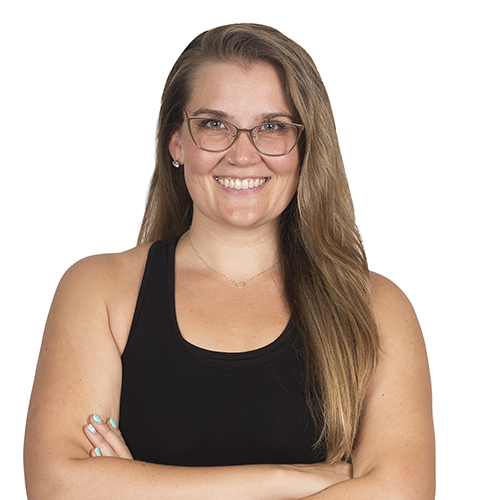
Guest blog post by Helen Doherty, Tier 2 Personal Trainer and HWX Instructor at Healthworks Cambridge